
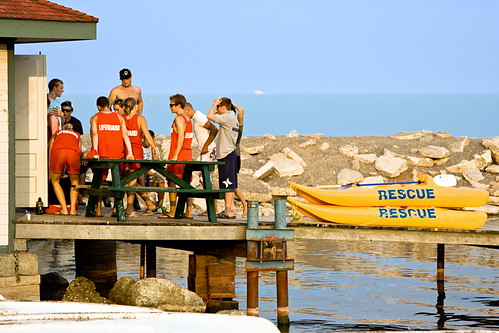
The Lifeguard Life
Want to enter the aquatic world Baywatch style? In order to get certified to become a Lifeguard, you must take and pass a Lifeguarding course through a recognized organization. Your best source to finding a class in your area is simply hitting the Internet and searching for associations like the Red Cross, YMCA, or local recreation centers.
Once you become a lifeguard, there are actually other certifications you can obtain to expand your aquatic resume and share your swimming knowledge with others—these certifications can often increase your pay scale and job responsibilities. For example, you can get your Water Safety Instructor (WSI) certification, which allows you to teach swim lessons of all levels to swimmers with a variety of skill levels through both group and private lessons.
LGI-The Gold Medal of Certification
One of the most beneficial and highest certifications you can achieve is for the Lifeguarding Instructor (LGI). This is a Red Cross program that permits you to teach a wide variety of water safety courses. From Lifeguarding to CPR/AED for the Professional Rescuer to Basic Water Rescue courses, this certification covers a large scope of information, which will serve to make you even more valuable to your employer.
In order to be eligible to receive this certification, you must meet the fundamental prerequisites of being at least 17 years old, holding a Fundamentals of Instructor Training (FIT) Certificate issued within the past year, and successfully completing a precourse written exam. Once you complete the course and score at least an 80 percent on the final written exams, you’re all set as an official Lifeguarding Instructor for the next two calendar years.
Jillian Muth-The LGI Veteran
“Achieving my LGI certification was definitely a proud moment of my lifeguarding career and only helped to further my position in my part-time job as a guard while in college.”
Bowling Green State University senior Jillian Muth has been LGI certified since 2006. During the four years she’s held this certification, Muth has taught dozens of classes, ranging from CPR Challenge Recertification courses to Sports First Aid. Muth believes the fact that she does hold this LGI certificate is what really set her apart when she applied for the position of Aquatics Student Supervisor at the BGSU Recreation Center in 2008. Although she is currently employed in only a head lifeguarding job, Muth did end up getting the job of Student Supervisor, which she fulfilled last year.
Nicholas Schilling: The LGI Rookie
BGSU junior Nicholas Schilling is currently enrolled in and taking an LGI class, with the hopes of sharing his aquatic knowledge with others through one day teaching health and safety classes himself. Upon successfully completing the course and passing the subsequent final exams this May, Schilling plans on beginning his career as an LGI at the BGSU Recreation Center, following in Muth’s footsteps.
“I’m just truly looking forward to being an LGI because I had such a great experience as a lifeguard and throughout the certification and recertification classes I’ve taken.”
How do I become an LGI?
Both Muth and Schilling are prime examples of how receiving an LGI certification can put lifeguards ahead of other guards in the aquatic world. If you’re interested in obtaining this certification, you should first personally evaluate your goals and interests and thoroughly make sure you’re ready for the responsibly inherent in this position. Next, check out your local aquatic centers for a class near you!
Share


