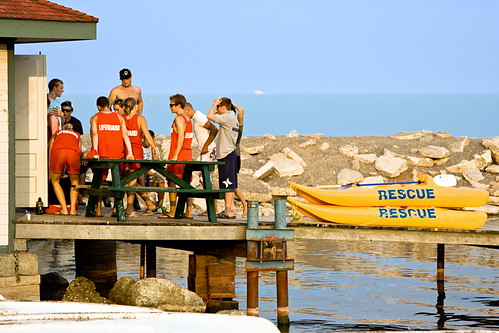
Doing the Baywatch thing? This is the ultimate source for Lifeguards. No Guard on duty.

Showing posts with label YMCA. Show all posts

Tuesday, April 6, 2010

How to Find a Lifeguarding Job

We’ve all heard it on the 6 o’clock news or as the hot topic of conversation while waiting in line at the grocery store—the economy is tough and it’s hard to find jobs. Thankfully for lifeguards everywhere, the aquatic community hasn’t suffered as much as the stock market. If you are a responsible and enthusiastic individual, it truly shouldn’t be too difficult to find a place or pool to work no matter where your location is.


Your first step is to become certified as a lifeguard and/or make sure your certifications are up-to-date before you can ask to be hired. See my post on how to become a lifeguard for more information. When I first obtained my Red Cross certification at 16, I didn’t even have a job lined up yet—but I knew I really wanted to guard and a job soon followed. Due to warmer weather and summer vacations, there tends to be more lifeguarding jobs available from Memorial Day through Labor Day. However, you can begin your search anywhere from January on, as companies like to staff early.


A great method for finding a job is to take a look at the different aquatic environments in your community, which would need lifeguards. Country clubs, park pools, recreation centers, and YMCAs are all obvious potential employers. And don’t forget about the less traditional guarding jobs, like water parks and beaches.


Who you know can always help, so see if you know anyone who works at or regularly attends these places and can put in a good word. Call the company or even stop by their location in person to apply. And if all else fails, get creative and ask a pool which may have a “swim at your own risk, no guard on duty” policy—they may very well take you up on the offer.


Share


Wednesday, March 24, 2010

Learning and Lifeguarding


The Lifeguard Life

Want to enter the aquatic world Baywatch style? In order to get certified to become a Lifeguard, you must take and pass a Lifeguarding course through a recognized organization. Your best source to finding a class in your area is simply hitting the Internet and searching for associations like the Red Cross, YMCA, or local recreation centers.


Once you become a lifeguard, there are actually other certifications you can obtain to expand your aquatic resume and share your swimming knowledge with others—these certifications can often increase your pay scale and job responsibilities. For example, you can get your Water Safety Instructor (WSI) certification, which allows you to teach swim lessons of all levels to swimmers with a variety of skill levels through both group and private lessons.


LGI-The Gold Medal of Certification

One of the most beneficial and highest certifications you can achieve is for the Lifeguarding Instructor (LGI). This is a Red Cross program that permits you to teach a wide variety of water safety courses. From Lifeguarding to CPR/AED for the Professional Rescuer to Basic Water Rescue courses, this certification covers a large scope of information, which will serve to make you even more valuable to your employer.


In order to be eligible to receive this certification, you must meet the fundamental prerequisites of being at least 17 years old, holding a Fundamentals of Instructor Training (FIT) Certificate issued within the past year, and successfully completing a precourse written exam. Once you complete the course and score at least an 80 percent on the final written exams, you’re all set as an official Lifeguarding Instructor for the next two calendar years.


Jillian Muth-The LGI Veteran


“Achieving my LGI certification was definitely a proud moment of my lifeguarding career and only helped to further my position in my part-time job as a guard while in college.”


Bowling Green State University senior Jillian Muth has been LGI certified since 2006. During the four years she’s held this certification, Muth has taught dozens of classes, ranging from CPR Challenge Recertification courses to Sports First Aid. Muth believes the fact that she does hold this LGI certificate is what really set her apart when she applied for the position of Aquatics Student Supervisor at the BGSU Recreation Center in 2008. Although she is currently employed in only a head lifeguarding job, Muth did end up getting the job of Student Supervisor, which she fulfilled last year.


Nicholas Schilling: The LGI Rookie

BGSU junior Nicholas Schilling is currently enrolled in and taking an LGI class, with the hopes of sharing his aquatic knowledge with others through one day teaching health and safety classes himself. Upon successfully completing the course and passing the subsequent final exams this May, Schilling plans on beginning his career as an LGI at the BGSU Recreation Center, following in Muth’s footsteps.


“I’m just truly looking forward to being an LGI because I had such a great experience as a lifeguard and throughout the certification and recertification classes I’ve taken.”


How do I become an LGI?

Both Muth and Schilling are prime examples of how receiving an LGI certification can put lifeguards ahead of other guards in the aquatic world. If you’re interested in obtaining this certification, you should first personally evaluate your goals and interests and thoroughly make sure you’re ready for the responsibly inherent in this position. Next, check out your local aquatic centers for a class near you!


Share


Tuesday, March 2, 2010

The Monetary Side of Lifeguarding

As I’ve said before—lifeguarding is more than a typical full-time summer or part-time school year job. The fact is that guarding requires certification beyond that involved as a Starbucks barista or restaurant waitress. Therefore, lifeguards can and honestly should require above minimum wage—currently set at an average of $7.50 across the United States (in the year 2010).

At a bare minimum, your employer should require all lifeguards to hold a valid lifeguarding, CPR/AED, and first aid certification. Valid refers to confirmation from a recognized source which can vouch for your proficiency at the required skills (i.e. Red Cross, YMCA, etc.). As certification in these areas often requires you to pay a fee for the class, you should be deserving of a wage above that of the typical non-professional job.

Be aware that if you are employed by a private company (from country clubs to private swim clubs), they do reserve the right to pay you what they deem fit. However, you should undoubtedly attempt to negotiate any pay wage which may fall below minimum wage, at the very least—due to the fact that your job does require outside certification and demonstrated expertise at expected skill levels.

If you find yourself in need of an argument as to why you deserve a paycheck above that of the typical employee, remind your company that the sole responsibility of your position is to protect patrons’ lives in an aquatic environment. False assumptions surrounding the job of a lifeguard (for example, that you just sit around all day) regrettably surrounds your chosen position. Therefore, it is up to you to prove to your employer that your job is to literally protect lives.


Sunday, February 28, 2010

Outdoor vs. Indoor Guarding


As a lifeguard with experience in both indoor and outdoor environments, I can relate to guards who’ve been in both situations. Besides the fact that no SPF is required at an indoor pool, there are definitely significant differences between the two. Lifeguarding techniques will certainly vary, depending on where your chair is located.

For those who enjoy getting their tan on while working, guarding at an outdoor pool is more than a day at the beach. Pools and beaches are just as different as indoor and outdoor places. Bodies of open water require knowledge of aquatic life, wave size, tide times, etc. and often require a certification beyond a typical lifeguarding one. Whether you’re on the sand on poolside, however, sunscreen is a must—even on overcast days. Attire will differ, for example, a windbreaker, sunglasses, or visor may help depending on the weather. As Mother Nature is unpredictable, outdoor lifeguards may lose shifts during inclement weather and should also be familiar on emergency procedures (like how to clear the pool in case of thunder and lightning).

If your place of employment lies within a Recreation Center or YMCA, than you know that there’s fun outside of the sun. It’s important to always dress for the weather you’ll be guarding in, not the weather outside and you may have to bring your bathing suit to work to change there (especially if there’s snow on the ground!). Although all aquatic environments can pose a slippery risk to people on deck, it’s often more of a possibility at indoor locations, as the water takes longer to dry and decks are often made of slick tile.

But no matter where you guard, our mission is still the same: To protect the lives and wellbeing of swimmers, whether pool or beach, outside or inside.


Wednesday, February 17, 2010

Want to Guard in the Aquatic World?

To tweak a well-known saying: With lifeguarding comes great responsibility. Just as the surface of the water may look deceiving, so too can the job of a guard. There is a false stereotype out there framing lifeguarding as an easy job for lazy teens looking to get their tan on. Not only have many guards graduated from their teen years, but many others work at indoor pools where the sun certainly doesn’t shine. Addressing the most significant assumption, lifeguarding is not a job for the idle.

In order to become a lifeguard, certain qualifications must be met. Though it may vary from one location to the next, most lifeguarding certification classes require participants to be at least 15 years of age (although a junior lifeguarding certificate can be obtained for those as young as 14) and you must be physically fit (the standard is being able to swim 300 meters). To give you an idea of the commitment involved, the American Red Cross Lifeguarding Class requires anywhere from 30-37 hours and is valid for three years.
In addition to possessing a lifeguarding certification, successful completion of classes in CPR (Cardiopulmonary Resuscitation) and First Aid will likely be the minimum requirements. Other possible certifications include AED (Automated External Defibrillator) and WSI (Water Safety Instructor). Specialized certifications could also be involved, for instance if you wanted to guard at an open water location or at a water park.

If you are a responsible and observant individual who would like to find certification classes in your area, your best bet is to contact your local branch of the Red Cross, YMCAs, Recreation Centers, and the like!


Tuesday, February 9, 2010

Welcome


Welcome to my blog! This is a site dedicated to sharing all aspects of a lifeguard’s life. Lifeguarding can definitely be a lifestyle all its own. It is more than merely a job which pays the bills (well, maybe at least one bill). From the Red Cross certified to the YMCA, from those who get their tan on while guarding to those who guard indoors while snow falls outside, lifeguards are undoubtedly more than the stereotypical, Baywatch images of babes in red suits jogging in slow motion down the beach line.

Lifeguards must be medically-minded individuals, fully prepared to utilize their first aid skills to those darn kids, who refuse to listen to our whistle blows and shouts not to run and end up falling and skinning their knees. Or how about knowing the proper way to give CPR to the elderly gentleman, who spent too much time in the hot tub? Few jobs outside of the hospital environment require the medical certification guarding does. A vigilant attention span is also essential, as prevention is everything in maintaining a safe environment for swimmers.

In the event of an unfortunate accident, correct technique in making water saves can literally become the difference between life and death. As first responders during emergencies, lifeguards need to know the legal implications involved. But lifeguarding can certainly be fun—guards enjoy a unique sense of authority over the aquatic environment, often resulting in strong bonds to their fellow guards. And don’t forget about the fact that bathing suits and flip flops are appropriate work attire. This blog will most certainly address all components of this job…happy guarding!